Medieval Peasant Embroidery Review
A Thoughtful First Impression
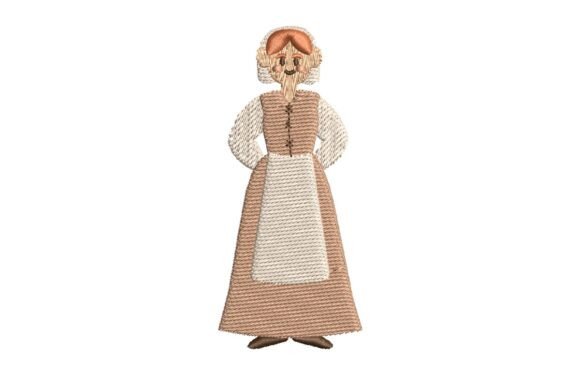
When I first opened the Medieval Peasant embroidery file on Creative Fabrica, I paused—not because it was flashy, but because it felt quietly intentional. This isn’t a whimsical fairy tale character with glittering wands or enchanted animals; it’s a grounded, historically resonant figure: a woman in a long brown dress, crisp white apron, and modest head covering. Her posture is calm, her expression gentle but resolute. The design leans into subtlety over spectacle—soft curves, balanced negative space, and layered fabric folds that suggest movement without exaggeration. As an embroidery designer who regularly sources files for commercial use, I immediately asked: *Does this translate well from screen to stitch? And more importantly—does it hold up as a finished handmade product?*
Where Medieval Peasant Fits Naturally
This design belongs on pieces that tell quiet stories: linen kitchen towels, organic cotton baby blankets, unbleached canvas tote bags, and heavyweight cotton aprons. It’s not built for high-contrast streetwear or neon-lit festival merch—it thrives in thoughtful, tactile spaces. Think nursery decor with muted palettes, boutique gift sets for history lovers, or seasonal handmade gifts tied to harvest festivals or medieval reenactment events. Its roots in the Fairy Tales category aren’t about magic, but about narrative texture—the kind that invites slow looking and personal connection.
Real-World Embroidery Performance
I tested Medieval Peasant across several substrates before committing to a client order: midweight cotton twill (for a custom apron), brushed poly-cotton sweatshirt fabric, and lightweight linen (for a pillow cover). Here’s what stood out:
- Hoop size & detail balance: The design fits comfortably in a 5x7" hoop, but the face and apron details are tight enough that I recommend stitching a test run—even if your machine handles small features well. Tiny facial features rely on precise satin and running stitches, not dense fill areas.
- Stitch density & wash durability: Fill stitch sections (like the dress hem and apron base) are moderate—not overly dense—so they hold up through repeated laundering, especially when paired with tear-away + cut-away stabilizer on cotton blends.
- Dark vs. light fabric behavior: On dark fabric, the white apron reads beautifully—but only if thread contrast is dialed in. I swapped standard white polyester for a slightly brighter, high-sheen thread to maintain clarity. On light fabric, the brown dress tones benefit from matte or semi-matte thread to avoid glare in product photos.
- Curved surfaces & stretchy knits: I avoided using Medieval Peasant on caps or curved sleeves. The composition relies on vertical alignment and even tension across flat planes. For sweatshirts, I used a firm cut-away stabilizer and basted the design center carefully—no puckering, but no margin for error on off-grain stretches.
Commercial Use Considerations
As someone who sells embroidered goods on Etsy and supplies custom apparel to local boutiques, I pay close attention to how a design affects perceived value and buyer trust. Medieval Peasant elevates a simple tote bag or tea towel from “cute” to “curated.” Customers notice craftsmanship in the apron’s clean satin edges and the subtle layering of the head covering—details that signal care, not automation. That perception directly supports higher price points and repeat engagement.
It also works exceptionally well in printable mockups. Because the figure occupies clear visual space without overwhelming background elements, it photographs cleanly on lifestyle shots—no heavy retouching needed. For digital sellers listing embroidery files or design assets, pairing Medieval Peasant with rustic-themed fonts and parchment textures strengthens brand consistency across listings.
Practical Notes Before You Stitch
Before adding Medieval Peasant to your next project, consider these steps:
- Always test on scrap fabric matching your final substrate—especially for nap, stretch, or texture (e.g., terry cloth towels).
- Review thread color contrast under natural and artificial light. Brown thread on ecru linen can fade visually; a warm taupe or burnt umber often reads more clearly.
- Check stitch density in critical zones—the apron strings and hairline edges—using your embroidery software’s preview mode.
- Confirm hoop size compatibility with your machine and frame setup. Some versions may include multiple hoop options—verify before digitizing.
- Compare light/dark fabric mockups side-by-side. What reads delicately on ivory may vanish on navy unless thread weight or sheen is adjusted.
- Use appropriate stabilizer: medium-weight cut-away for knits, tear-away for stable wovens, and fusible + tear-away for lightweight linens.
- Inspect small details post-stitch, especially around the eyes and apron ties—trim stray threads carefully to preserve definition.
- Review licensing terms on the Creative Fabrica product page. Since Medieval Peasant is listed as an embroidery file, confirm whether it permits commercial use of finished products—this is essential for Etsy sellers and craft fair vendors.
Final Thoughts for Designers & Makers
Medieval Peasant won’t dominate a crowded craft fair table with volume or brightness—but it will draw people in for a second look. Its strength lies in authenticity, restraint, and quiet storytelling. For embroidery designers building cohesive collections, it pairs naturally with botanical borders, heraldic motifs, or hand-lettered quotes in period-appropriate fonts. For Etsy sellers, it fills a niche: customers seeking meaningful, non-trend-driven handmade products—think grandparents ordering heirloom baby blankets or teachers sourcing classroom-themed gifts.
It’s not a plug-and-play file for beginners rushing through holiday orders. But for makers who value intention over speed—and who understand that every stitch contributes to how a customer feels holding their finished item—Medieval Peasant is a thoughtful, versatile, and commercially sound addition to your embroidery library.