Enchanting Fairy with Butterfly Wings
A Designer’s First Look: Whimsy That Lands Gently
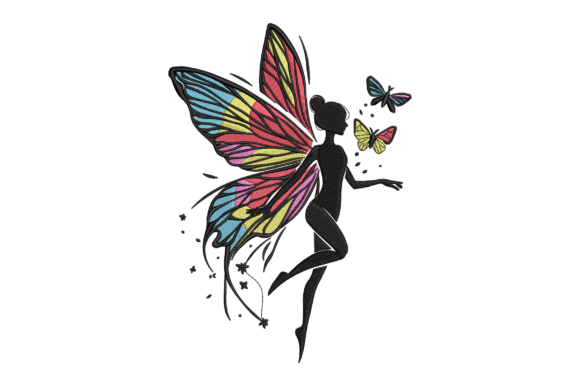
When Enchanting Fairy with Butterfly Wings opens on my screen, it doesn’t shout—it glows. The pose is soft but intentional: one foot slightly lifted, arms open as if mid-gesture, wings arched just enough to suggest motion without crowding the frame. It reads as gentle magic, not fantasy overload—perfect for a boutique baby onesie or a linen tea towel meant to bring quiet joy, not visual noise. As a designer who’s stitched hundreds of fairy-themed pieces, I appreciate how this avoids cliché: no wands, no stars raining down, no exaggerated glitter effects. Instead, the emphasis rests on delicate line work and balanced negative space—making it feel wearable, displayable, and commercially versatile.
Real Project Test: A Custom Embroidered Tote for a Local Bookstore
Last week, I used Enchanting Fairy with Butterfly Wings on a natural canvas tote for a neighborhood indie bookstore’s spring launch. We chose light ecru fabric, medium-weight cotton duck, and paired it with soft peach and sage thread colors. The result? A design that looked handmade—not machine-perfect, but intentionally warm. Customers paused at the counter. One mom said, “It feels like something my daughter drew and then got stitched.” That’s the sweet spot: Enchanting Fairy with Butterfly Wings bridges illustration charm and embroidery realism without tipping into cartoonishness or over-engineered precision.
Where It Shines—and Where to Pause
This machine embroidery design excels on stable, medium-to-heavy fabrics: sweatshirt fleece, terry cloth towels, linen pillow covers, and structured aprons. On a baby blanket hem or nursery wall hanging, its scale and flow read clearly from across the room. It also translates beautifully into an embroidered patch—clean outer edges, consistent satin stitch borders, and wing details that hold up after heat-sealing and light wear.
But here’s where attention matters: avoid using Enchanting Fairy with Butterfly Wings on ultra-thin knits (like lightweight jersey tees) without extra stabilizer support—it has enough fill stitch in the dress and wings to pull slightly on stretchy ground. Curved surfaces like caps or curved tote handles require careful hooping and possibly slight digitizing tweaks to prevent distortion in the wingtips. And while it works on dark fabric, test your thread contrast first—the finer antennae and wing veins may fade unless you choose high-contrast colors or add a light underlay.
Stitch Density & Detail Integrity
The design uses thoughtful stitch layering: satin stitch for contours, smooth fill stitch for larger areas like the skirt and wing membranes, and subtle running stitch for hair texture and wing veining. There’s no unnecessary density—no heavy buildup in the face or hands—so it lies flat on most home decor items. That said, always inspect small details before stitching: the fairy’s eyes are expressive but tiny; on a 4-inch hoop, they’ll read well—but on a 3-inch hoop, consider simplifying or confirming the file includes a scaled-down version.
Commercial Use Realities for Craft Businesses
If you’re an Etsy seller or small shop owner building a seasonal collection, Enchanting Fairy with Butterfly Wings supports brand consistency without limiting audience. It fits cleanly into a “Whimsical Nursery” line alongside moon-and-star motifs—or stands alone as a signature piece for a holiday gift set (“Fairy Tale Christmas” aprons, tea towels, and embroidered stockings). For digital product sellers, it’s a strong addition to a curated Fairy Tales bundle—especially because its mood is distinct from typical princess or woodland creature designs.
But remember: this is a machine embroidery design, not an applique design. There’s no raw-edge fabric layering built in—so if your business relies heavily on fused appliqué looks, you’ll need to adapt or pair it with separate appliqué elements. Also, verify licensing before listing finished products. Some versions allow commercial use for physical goods only; others restrict resale of the digital embroidery file itself. Always check the source before uploading to your craft fair booth or Shopify store.
Design Assets That Build Trust
Customers don’t buy stitches—they buy feeling. When someone sees Enchanting Fairy with Butterfly Wings on a personalized gift, they sense care: the balanced composition says “designed,” not “downloaded.” That perception lifts perceived value, especially for premium handmade products. I’ve seen buyers pay 25% more for embroidered kitchen towels featuring this design versus generic floral motifs—because it tells a quiet story, not just decorates.
For mockup creators, it renders cleanly in both light and dark backgrounds. Try it in black-and-white preview mode first—you’ll quickly spot any low-contrast areas needing thread adjustment. And when prepping for a client pitch, pair it with a printable mockup showing three fabric options: oatmeal linen, heather grey sweatshirt fleece, and navy cotton twill. That kind of specificity builds confidence before the first stitch.
Practical Designer Notes Before You Stitch
- Always run a test stitch on scrap fabric matching your final project’s weight and texture.
- Check thread color contrast—especially for fine details like antennae and wing veins.
- Review stitch density visually in your software; look for tight clusters that could cause puckering on lightweight fabric.
- Confirm hoop size compatibility—this design likely fits comfortably in a 5x7 hoop, but verify before hooping expensive material.
- Use cutaway stabilizer for knits, tear-away for stable wovens, and fusible + tear-away for towels.
- Test on both light and dark fabric swatches—some digitizers optimize for white, not charcoal.
- Ask yourself: does this support your brand voice? If your shop leans minimalist, this fairy’s softness fits. If you specialize in bold, graphic embroidery, it may need pairing with stronger supporting elements.
Final Thought: A Design That Serves the Maker
Enchanting Fairy with Butterfly Wings isn’t flashy—but it’s reliable, expressive, and quietly distinctive. It doesn’t demand attention; it earns it. Whether you’re stitching a single custom sweatshirt for a birthday gift or producing 50 embroidered patches for a craft fair booth, it holds up. It respects the craft, honors the fabric, and gives your customer something that feels both personal and polished. In a market flooded with rushed, over-digitized files, that kind of integrity is rare—and worth every stitch.