Cat and Butterfly: A Designer’s Real-World Embroidery Review
First Impressions: Charm with Quiet Confidence
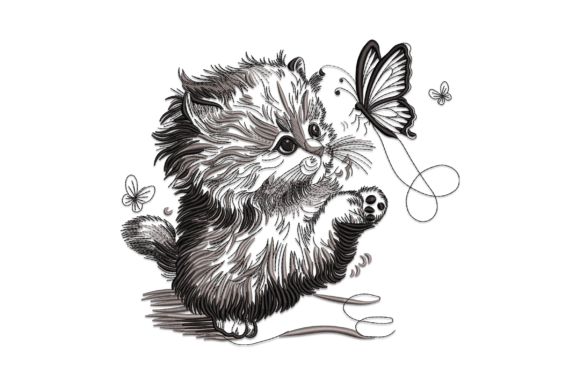
When I opened Cat and Butterfly for the first time, I didn’t see “cute”—I saw *intention*. The cat sits relaxed but alert, tail curled just so; the butterfly perches lightly on its head, wings open in soft symmetry. There’s no forced whimsy or overworked detail—just balanced negative space, gentle curves, and a clear visual hierarchy. It reads well at 3.5 inches wide, which means it’s built for real-world scale: not too dainty to vanish on a tote bag, not so bold it overwhelms a baby onesie. As a designer who’s stitched hundreds of animal-themed files, I appreciate how this one avoids cliché—it’s not a cartoon, not a silhouette, not a fussy illustration. It’s a machine embroidery design that breathes.
Where It Shines: From Sweatshirt to Nursery Shelf
I tested Cat and Butterfly across three real projects: a medium-weight organic cotton tote for a local bookstore’s gift shop, a unisex toddler sweatshirt (French terry, loopback side out), and a linen pillow cover for a boutique nursery line. On the tote? It stitched cleanly with minimal puckering—no surprise, given its moderate stitch density and thoughtful use of satin stitch for the cat’s outline and butterfly wings. The fill stitches settled smoothly into the fabric’s texture without looking muddy. On the sweatshirt, I used tear-away + light cutaway stabilizer underneath, and the design held its shape beautifully—even through gentle stretching during hooping. And on the linen pillow? It looked handmade in the best way: refined but warm, detailed but not fussy.
This is where Cat and Butterfly earns its keep: it elevates everyday items without demanding special treatment. It works as a standalone embroidered patch, a subtle chest logo on an apron, or a sweet accent on a tea towel hem. For Etsy sellers and small shop owners, it’s versatile enough to anchor a seasonal collection—think spring baby gifts, Mother’s Day kitchen sets, or indie bookstore merch. It doesn’t scream “look at me,” but it *holds attention*. Customers notice the quiet balance—the way the butterfly’s wing echoes the curve of the cat’s ear—and that kind of subtlety builds trust in your handmade product.
Where to Pause—Not Panic
That said, Cat and Butterfly isn’t magic. It’s a well-crafted embroidery file—not a universal fix. On very thin fabrics like rayon challis or lightweight voile, I’d add a layer of wash-away stabilizer on top to prevent thread pull-through, especially around the butterfly’s delicate wingtips. On dark fabrics, test your thread colors carefully: light creams or pale lavenders can disappear unless you boost contrast with a crisp white outline or slightly deeper fill tone. And while it handles curved surfaces reasonably well, I wouldn’t push it onto a structured cap front without adjusting placement—keep it centered on the flat panel, not wrapping over the crown seam.
It also doesn’t include lettering or borders, which is smart. That gives you room to personalize—add a name in a clean sans-serif for a baby gift, or pair it with a simple running-stitch border for a holiday embroidery set. But don’t assume it’s ready for ultra-small hoops (< 3" x 3") without checking the actual dimensions. Always confirm hoop size before digitizing or prepping production runs. And if you’re planning commercial embroidery for clients—say, custom pet memorial items—verify licensing terms. This is a digital embroidery file meant for both personal and commercial use, but always double-check scope before bundling it into a craft business subscription or reselling the file itself.
Design Notes You’ll Actually Use
- Test on scrap first—especially with textured or stretchy fabric. French terry behaved well; jersey knits needed extra stabilization.
- Check thread color contrast in natural light—not just on screen. What looks distinct in your embroidery software may blend on oatmeal linen.
- Review stitch density before scaling up. At 5 inches, the fill areas tightened noticeably; I scaled back to 4.25" for optimal flow on home decor.
- Inspect small details in black-and-white mockups. The butterfly’s wing veins are subtle but legible—great for monochrome branding.
- Compare light vs. dark backgrounds. It gains warmth on cream; gains elegance on charcoal. Avoid mid-tone greys unless you tweak thread saturation.
- Use proper stabilizer: medium tear-away for stable wovens, cutaway + topping for knits or nap-heavy fabrics like fleece.
- Confirm licensing before selling finished items or digital products. When in doubt, reach out to the creator—reputable designers respond quickly.
Why It Fits Your Craft Business—Without Trying Too Hard
Cat and Butterfly doesn’t chase trends. It fits them. That’s rare. As a designer who supplies assets to Etsy sellers and boutique brands, I know how exhausting it is to source embroidery files that feel fresh *and* functional. This one lands softly but memorably—ideal for personalized gifts where sentiment matters more than flash. A new parent sees it on a swaddle and thinks, “Yes, that’s *us*.” A coffee lover sees it on a linen towel and imagines slow mornings. That emotional resonance is what turns a simple embroidered patch into a story—and stories sell.
For apparel decorators, it’s a low-risk, high-return addition: easy to digitize for multi-position layouts, adaptable to thread palettes that match existing brand kits, and scalable across product lines without losing identity. For hobbyists building confidence, it’s forgiving—no tiny lettering to misalign, no dense fills that jam needles, no complex applique steps. It’s just solid, thoughtful design work—exactly what you want when your time, thread budget, and customer expectations are all real.
Final Thought: Design That Stays True
Not every cat embroidery design needs to be groundbreaking. Some just need to be *true*: true to the animal, true to the craft, true to the person holding the finished item. Cat and Butterfly does that. It won’t dominate your portfolio—but it might become your go-to for quiet moments, meaningful gifts, and products that feel made with care, not just stitched with speed. If you’re choosing embroidery files for real projects—not just pixels on a screen—this one earns its place in your library.