Space Nebula: A Designer’s Real-World Embroidery Review
First Impressions: Mood, Shape, and Where It Naturally Lives
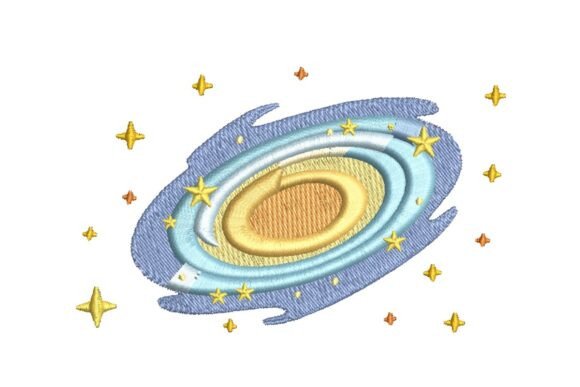
When I opened Space Nebula, I didn’t just see a galaxy—I felt the quiet awe of looking up on a clear night. The swirling blue and yellow hues aren’t chaotic; they’re orchestrated—soft gradients built with layered fill stitches that suggest depth, not flatness. The stars? Not scattered randomly, but placed with intention: some sharp and bright (likely satin or small star-shaped fill), others fainter, like distant light. It’s romantic, yes—but also precise. That balance is rare. As a designer who regularly sources embroidery files for client work and my own craft business, I immediately pictured this on a baby blanket for a stargazing-themed nursery, or as a subtle chest emblem on a charcoal sweatshirt for a boutique apparel line.
Real Project Test: A Custom Tote Bag for a Local Bookstore
Last week, I stitched Space Nebula onto a natural linen-cotton tote for a small bookstore’s “Cosmic Reads” summer promotion. Why this design? Because it’s legible at 4.5 inches wide—not too busy to read from across a table, yet detailed enough to invite closer inspection. On the textured fabric, the swirls held up beautifully: the fill stitch density was moderate (no puckering), and the star highlights popped without needing metallic thread. Customers paused. They asked, “Is that hand-drawn?” That’s the handmade product magic—Space Nebula reads as intentional art, not clipart. For Etsy sellers or small shop owners, that pause translates directly to engagement and perceived value.
Where It Shines—and Where It Needs Thought
Space Nebula excels in medium-to-large applications where its atmospheric flow has room: pillow covers, tea towels, aprons, and unstructured outerwear like denim jackets or oversized sweatshirts. It works especially well as an embroidered patch—its rounded shape avoids harsh corners that snag or fray. On baby items (onesies, burp cloths), the soft color palette feels gentle and gender-neutral, and the lack of fine linework means no risk of tiny stitches catching on delicate skin.
But here’s what I watched closely: on stretchy fabric like cotton jersey, I used a cutaway + tear-away stabilizer combo and reduced top tension slightly—the nebula’s curves stayed smooth, but the stars needed extra anchoring. On dark fabric, I confirmed thread contrast by stitching a test swatch in both navy and charcoal; the yellow held up, but the palest blues faded unless I swapped to a slightly brighter tone. And on curved surfaces—like the front panel of a structured cap—I’d recommend resizing Space Nebula down to 3.25 inches max. Anything larger risks distortion in the outer swirls.
Design Integrity in Commercial & Handmade Contexts
As a commercial embroidery designer, I judge files not just by beauty but by behavior: does it build trust? Does it scale across products without losing character? Space Nebula delivers. Its visual personality stays consistent whether stitched on a $12 tea towel or a $98 limited-edition pillow cover. That consistency strengthens brand cohesion—for a creative entrepreneur launching a space-themed lifestyle line, this isn’t just a design asset; it’s a recognizable motif. Buyers recognize quality when stitch clarity holds up under close inspection, and Space Nebula’s balanced density avoids the “overstuffed” look that cheapens handmade presentation.
For holiday embroidery or personalized gifts, its theme is timeless—not tied to a trend, so it won’t feel dated next season. And unlike many robot-themed designs (which often skew technical or cartoonish), Space Nebula bridges whimsy and sophistication—making it versatile across age groups and retail contexts, from craft fairs to boutique branding.
Practical Designer Notes Before You Stitch
- Always test first: Run Space Nebula on scrap fabric matching your final project’s weight and texture—even if it’s the same base material, dye lots and finishing affect stitch hold.
- Check thread colors against background: The blue/yellow palette reads differently on oat, black, or heather gray. Try a black-and-white mockup to assess value contrast before committing.
- Review stitch density visually: Zoom in on the file preview—look for tight clusters near star centers. If present, consider lightening density in those zones for better wash durability.
- Confirm hoop size compatibility: This design likely fits standard 5x7 hoops comfortably, but verify before hooping—especially if pairing with text or borders.
- Stabilizer matters: For lightweight or textured fabrics, use medium-weight cutaway. For stable woven cottons, tear-away is sufficient.
- Licensing check: Since this is categorized under Robots but clearly an embroidery design (not a physical robot), confirm whether the license permits commercial use of finished products—or resale of the digital embroidery file itself—before listing on Etsy or bundling into design assets.
Bottom line? Space Nebula isn’t just another machine embroidery design—it’s a quietly confident one. It doesn’t shout. It invites. And in a market saturated with overdesigned, low-resolution files, that restraint is its strongest feature. Whether you’re stitching a custom gift, building a cohesive product line, or sourcing reliable design assets for your craft business, Space Nebula earns its place—not because it’s flashy, but because it’s thoughtful, adaptable, and genuinely ready for real-world use.