Onion Harvest: A Rustic, Versatile Embroidery Design for Small Business Merch
First Impression: Warm, Authentic, and Professionally Rustic
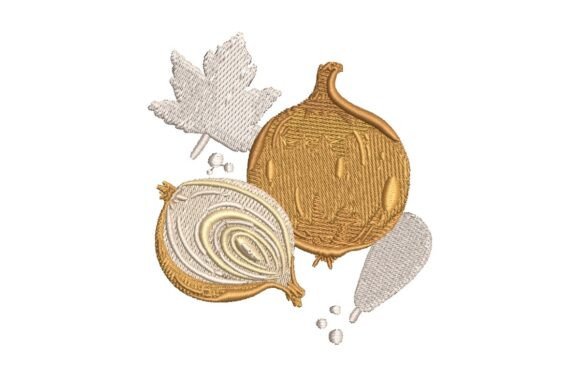
As an embroidery designer who’s developed hundreds of commercial designs for cafés, farms, boutiques, and handmade brands, my first read on Onion Harvest is immediate and positive: it signals authenticity without sacrificing polish. The title alone evokes farm-fresh credibility, while the description — “a beautifully stitched embroidery design featuring whole and sliced onions” — tells me this isn’t just decorative; it’s conceptually grounded in food culture, craftsmanship, and tactile storytelling. For small business merch, that’s gold. It reads as friendly yet intentional — rustic enough for a farmers’ market stall or artisan bakery, refined enough for a premium apron line or boutique gift shop. It avoids cliché while leaning into warmth, nature, and quiet confidence — exactly the tone many handmade brands strive to embody.
Real-World Performance Across Business Applications
Onion Harvest shines where many food-themed embroidery files falter: versatility without visual compromise. As an embroidered patch, its layered onion forms (whole bulb + clean cross-section) provide natural hierarchy and dimension — ideal for sew-on branding on tote bags, denim jackets, or staff aprons. On cap fronts, the design’s balanced composition holds up well at 2.5–3 inches wide, especially when simplified slightly for curvature — think bold outer ring and clear central slice. For custom apparel like work shirts or café uniforms, Onion Harvest works beautifully as a chest accent or sleeve detail, offering subtle brand reinforcement without overwhelming function.
It also excels in tactile contexts. On textured fabrics like canvas totes or linen aprons, the implied “stitched texture” of the design harmonizes with fabric grain — no fighting against the material. As a product packaging accent (think stitched tags on jarred preserves or herb bundles), it adds handmade credibility that boosts perceived value. And for Etsy sellers or craft studios, Onion Harvest strengthens visual consistency across digital assets: use it in printable mockups, social media banners, and even as a watermark on pattern PDFs — all while staying rooted in your core theme.
Where to Use It Thoughtfully — Not Everywhere
Like any strong machine embroidery design, Onion Harvest rewards intentionality. Avoid shrinking it below 1.75 inches for embroidered patches — fine details in the sliced onion layers may blur or stitch poorly on low-density stabilizer. Cap embroidery demands special attention: test the design on a curved surface first, and consider simplifying inner linework if stitch density feels heavy on structured front panels. Dark uniforms (navy, charcoal, black) require high-contrast thread colors — avoid light yellows or pale greens unless paired with underlay or shadow stitching.
Also be mindful of fabric texture: highly napped or stretchy materials (like fleece or knit caps) need extra stabilization to prevent distortion around the onion’s rounded edges. And while Onion Harvest suggests nature and freshness, it doesn’t include text — so if your brand relies on name recognition, pair it thoughtfully with a clean wordmark rather than forcing lettering into the file itself. This is a design asset, not a complete logo system — and that’s its strength.
Brand Identity & Customer Trust: More Than Just a Pretty Onion
In small business merch, every stitch communicates. Onion Harvest subtly reinforces values: care (in slicing), seasonality (in form), and craft (in execution). When customers see it on a café apron or local market tote, they don’t just register “onion” — they register *intention*. That builds trust faster than generic icons ever could. It supports brand identity by anchoring your visual language in something tangible and sensory — especially valuable for food-adjacent businesses (bakeries, florists, pet treat makers using “farm-to-bowl” messaging) who want to signal quality without saying a word.
For handmade product lines, Onion Harvest elevates perceived value: it reads as custom-designed, not clip-art. That translates directly to buyer engagement — shoppers linger longer on items with thoughtful embroidery, and they’re more likely to photograph and share them. In event merch or customer gifts, it becomes a quiet ambassador: memorable, warm, and distinctly yours.
Practical Designer Notes Before You Stitch
Before sending Onion Harvest to production — whether for your own shop or a client’s order — follow these field-tested steps:
- Test in black and white first: Confirm readability and contrast without color bias.
- Check small patch size performance: Resize to 1.75" and run a virtual stitch simulation — look for thread nesting or lost definition in the sliced layers.
- Review thread color contrast: Especially on dark or textured fabrics — what reads clearly on screen may vanish on twill.
- Inspect spacing between elements: Ensure the whole onion and sliced portion maintain breathing room at target sizes.
- Confirm hoop size compatibility: Does it fit comfortably within your standard hoops? If oversized, plan for re-hooping or multi-position setups.
- Test on real fabric: Run a sample on your intended base — cotton duck, canvas, or poly-cotton blend — with appropriate stabilizer.
- Create a client-approved mockup: Use a printable mockup to show how Onion Harvest lives on actual products before stitching begins.
- Compare beside other design assets: Does it sit comfortably next to your logo, typography, or secondary patterns?
- Verify commercial licensing: Since this is for small business merch, ensure the digital embroidery file permits commercial embroidery and resale of finished product.
Remember: Onion Harvest isn’t just another food-themed embroidery file — it’s a flexible, emotionally resonant design asset built for real business use. Whether you're embroidering for a weekend farmers’ market stall or scaling a handmade brand across Etsy and wholesale, this design earns its place in your active design assets folder. Treat it with intention, test it with rigor, and let its quiet, earthy charm do the talking.