Strawberry Vine Embroidery Review
First Impression: Friendly, Fresh, and Professionally Handmade
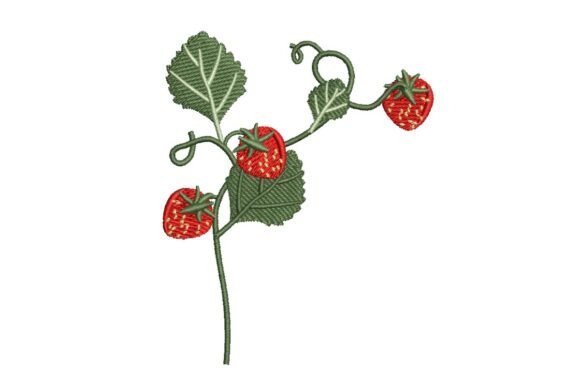
As an embroidery designer who’s developed hundreds of designs for small business merch—cafés, boutiques, bakeries, florists, and handmade studios—I immediately recognize Strawberry Vine as a confident entry in the Single Flowers category. The name alone evokes warmth and approachability: not overly sweet, not stiffly formal—just ripe, grounded, and quietly intentional. “Charming strawberry vine embroidery perfect for kitchen towels, garden aprons, or fruity summer crafts” tells me this isn’t just decorative fluff. It’s built for context: real products, real customers, real brand moments.
Business Use: Where Strawberry Vine Shines—and Where It Needs Care
Strawberry Vine excels where authenticity meets utility. On staff aprons at a local café? Yes—it adds personality without overwhelming function. As a chest patch on organic cotton tote bags for a boutique? Absolutely. Its looping vine structure provides natural flow across curved surfaces like cap fronts or sleeve cuffs, and its organic rhythm reads well even at 2.5"–3" wide—ideal for embroidered patch applications on uniforms or reusable product packaging.
For custom apparel, it works especially well as a subtle sleeve detail on work shirts or a soft accent above a pocket on garden aprons. Because it’s rooted in botanical realism—not cartoonish abstraction—it supports brand identity for businesses that value craft, seasonality, and tactile quality. Think: a florist launching branded merchandise, a pet brand using fruit motifs to signal freshness and care, or an Etsy seller bundling hand-embroidered patches with printable mockups for digital buyers.
But here’s where experience matters: Strawberry Vine needs thoughtful placement. Avoid scaling it below 1.75" for embroidered patch use—berries and leaf veins may lose clarity. Cap fronts demand careful thread color selection; on dark uniforms, high-contrast thread (like ecru on navy or kelly green on charcoal) preserves definition. And while its stitch density feels moderate—not dense enough to buckle lightweight twill, not sparse enough to look unfinished—it still benefits from tear-away stabilizer on textured fabric like linen-blend aprons or canvas totes.
Brand Identity & Customer Trust: More Than Just a Pretty Vine
Small business owners often underestimate how much a single embroidery design influences perceived professionalism. Strawberry Vine lands in that sweet spot between handmade charm and commercial polish. It doesn’t scream “DIY”—it whispers “thoughtfully made.” That nuance builds trust: customers associate clean, balanced vine curvature and proportional berry sizing with attention to detail, which translates directly to confidence in your baked goods, curated goods, or artisan services.
Used consistently across aprons, tote bag designs, and staff caps, Strawberry Vine becomes a quiet anchor in your visual language—especially when paired with complementary design assets like simple monograms or minimalist typography. It supports visual consistency without demanding rigid repetition: rotate it slightly on a sleeve, mirror it on a pair of garden gloves, or isolate one berry cluster as a product label accent. That flexibility is gold for creative studios juggling multiple client brands or seasonal collections.
Practical Designer Notes Before You Stitch
If you’re evaluating Strawberry Vine for commercial embroidery or small business merch, run these checks before digitizing or ordering bulk files:
- Test it in black and white first. Does the vine read clearly without color cues? If stems vanish or berries blur together, adjust contrast in your embroidery software or request a simplified version.
- Verify patch viability. Resize to your target embroidered patch dimensions (e.g., 2" x 2.5") and check spacing between leaves and fruit—tight crowding risks thread nesting or skipped stitches.
- Review thread color contrast. Especially on dark or heathered fabrics. A vibrant red berry loses impact next to muddy gray thread—choose true scarlet or cherry red for punch.
- Confirm hoop size compatibility. Most machine embroidery design versions of floral vines fit standard 4" x 4" hoops, but always double-check your file metadata or vendor specs before production.
- Test on real fabric. Run a sample on your intended base—linen for aprons, cotton duck for totes, twill for caps—to assess how the vine lays over texture and how wash cycles affect stitch integrity.
- Use proper stabilizer. Medium-weight cutaway for stretchy knits; tear-away for stable wovens. Skipping this step risks puckering—especially along the vine’s longest curves.
- Create a client-ready mockup. Embed Strawberry Vine into a printable mockup showing it on an apron, tote, and cap. Visual context accelerates approval and reduces revision rounds.
- Compare beside existing design assets. Does it harmonize with your logo, typography, or other floral elements? If you already use sunflowers or lavender in your brand palette, does Strawberry Vine complement—or compete?
- Confirm commercial licensing. Since this is intended for small business merch, ensure your digital embroidery file purchase includes rights for resale, branding, and unlimited physical output. Never assume.
Final Thought: A Strategic Asset, Not Just a Design
Strawberry Vine isn’t merely a charming addition to your embroidery library—it’s a versatile, scalable piece of brand infrastructure. When applied intentionally—as part of apron embroidery, cap embroidery, or a signature tote bag design—it strengthens recognition, elevates perceived value, and quietly signals your commitment to cohesive, human-centered design. For small business owners and embroidery shops alike, it’s proof that the right embroidery file does more than decorate: it connects, reassures, and endures. Whether you’re stitching for a summer farmers’ market pop-up or building long-term brand assets for a handmade product line, Strawberry Vine delivers both aesthetic warmth and commercial reliability—rooted, ripe, and ready.