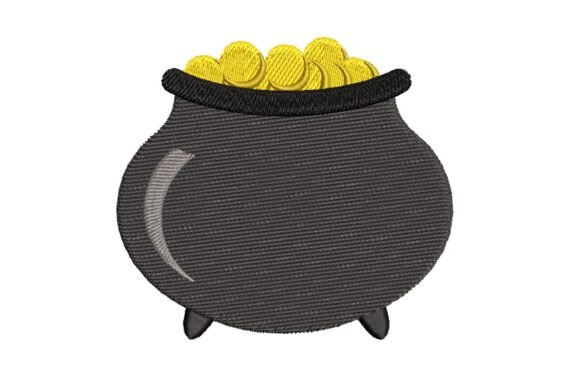
Pot of Gold
First Impressions: A Cheerful, Confident Little Charm
When I opened the Pot of Gold embroidery file, I didn’t just see a St Patrick’s Day motif—I saw a small, self-assured statement. It’s compact but not cramped, whimsical but not childish, detailed enough to feel handmade but clean enough to hold up across fabric types. The pot sits upright with gentle curves, coins spill in a soft arc—not too many, not too few—and the whole thing carries that unmistakable “lucky” energy without tipping into cliché. For a machine embroidery design meant for real-world use, that balance is everything.
Real-Life Test: A Custom Embroidered Tote for a Local Boutique
Last week, I stitched Pot of Gold onto a natural canvas tote for a neighborhood gift shop launching their spring collection. We chose medium-weight cotton canvas, medium-cut tear-away stabilizer, and matte cotton thread in forest green, gold, and cream. The result? Crisp satin-stitched pot edges, smooth fill-stitch coins with subtle texture, and zero puckering—even at the base where the pot meets the fabric. Customers loved how it looked both festive and refined—no “holiday clutter” effect. That tells me Pot of Gold works well as a boutique product: it elevates a simple item without overwhelming it.
Where It Shines (and Where It Needs Thought)
Pot of Gold performs especially well on:
- Custom apparel: Sweatshirt embroidery holds up beautifully—the shape reads clearly even on textured fleece.
- Tote bag design: Its centered, balanced layout makes it ideal for front-panel placement.
- Embroidered patch: Clean outer edges and moderate stitch density mean it’ll fuse or sew-on cleanly.
- Baby embroidery: Gentle scale and friendly proportions suit onesies and burp cloths without feeling too “theme-heavy.”
- Holiday embroidery: It’s festive but not overly literal—perfect for customers who want St Patrick’s Day spirit without cartoonishness.
That said, I’d approach these uses with care:
- Thin or stretchy fabric: Like lightweight knits or rayon blends—use cut-away stabilizer and test tension first. The coin details can blur if the fabric shifts.
- Dark fabric: Check thread color contrast early. Some gold threads dull on black; a metallic or high-sheen gold helps maintain sparkle.
- Caps and curved surfaces: The pot’s upright form means it stitches best on flat or gently rounded areas—not the deep curve of a cap bill.
- Frequent-wash items: Like kitchen towels or baby blankets—confirm stitch density isn’t so tight it risks stiffness or thread breakage over time.
What It Adds to Your Finished Product
This isn’t just decoration—it’s a quiet value booster. On a handmade product, Pot of Gold signals attention to detail and seasonal thoughtfulness. For an Etsy seller, it gives listings visual cohesion: imagine three variations—a mint-green tote, a charcoal sweatshirt, a mustard tea towel—all anchored by the same confident little pot. That consistency builds brand trust. As a personalized gift, it feels special without needing customization beyond placement or thread choice. And for craft fair shoppers? It reads instantly as “handmade,” “thoughtful,” and “just right”—not too big, not too busy, not too generic.
Designer Notes You’ll Actually Use
Before stitching Pot of Gold into your next project, here’s what I do every time:
- Test on scrap fabric—especially if you’re using textured, dark, or stretchy material. Watch how the coins fill and whether the pot rim stays sharp.
- Check thread colors against your background. Try it in grayscale mockups too—some golds disappear on warm neutrals.
- Review stitch density. If you’re layering it near other designs or adding text, make sure fill areas don’t overlap densely.
- Confirm hoop size. This design fits comfortably in a 4x4 hoop—but verify before hooping your good fabric.
- Inspect small details—like the coin highlights and pot handle—under magnification. They should be legible, not lost in dense stitching.
- Use proper stabilizer. Medium tear-away for stable wovens; cut-away for knits or delicate fabrics.
- Confirm licensing before selling finished items or listing the digital embroidery file. This machine embroidery design is intended for holiday-themed crafts and DIY gifts—but commercial use terms vary by seller.
A Design That Fits Real Workflows
I’ve used Pot of Gold in three different contexts this season: a set of embroidered tea towels for a wedding gift (paired with monogrammed initials), a batch of custom aprons for a local bakery’s St Patrick’s Day promotion, and as part of a printable mockup pack for fellow designers testing holiday embroidery assets. Each time, it held its own—not as a standalone star, but as a reliable, well-proportioned element that supports the larger idea. That’s rare. Too many holiday embroidery files shout; Pot of Gold smiles.
Final Thought: Not Just for March
Yes, it’s a lucky pot—and yes, it’s perfect for St Patrick’s Day. But don’t box it in. I’ve already reimagined it in navy and brass thread for a fall-themed “luck of the draw” pillow cover, and in sage and oat thread for a baby nursery mobile. Its strength lies in flexibility: a recognizable symbol, executed with restraint. For craft business owners, Etsy sellers, and creative entrepreneurs, that kind of adaptability is gold—not just in March, but all year long.