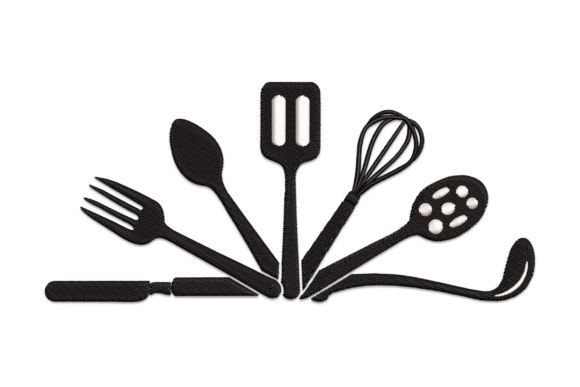
Kitchen Utensils Machine
A Practical Review for Small Business Embroidery Use
As an embroidery designer who’s digitized and stitched thousands of commercial projects—from café aprons to boutique tote bags—I approached Kitchen Utensils Machine with both curiosity and critical intent. The title alone suggests utility, but the description—“Spruce up your fabrics with this charming embroidery design… fun and whimsical touch”—immediately signals a design meant to humanize, not just decorate. For small businesses building authentic brand identity through handmade product and custom apparel, that nuance matters deeply.
First Impression: Friendly, Approachable, and Professionally Whimsical
Kitchen Utensils Machine lands as warm and intentional—not cartoonish, not sterile. It feels like the kind of machine embroidery design that belongs on a local bakery’s staff apron or a florist’s linen tote: grounded in craft, yet expressive enough to spark a smile. It avoids over-engineered complexity, which is a strength—not a limitation—for branded patch use. That balance makes it versatile across industries: food trucks, artisan studios, pet bakeries, even wellness studios leaning into “kitchen-as-sanctuary” themes. Its charm isn’t cutesy; it’s confident in its simplicity, supporting brand identity without shouting over it.
Real-World Performance Across Merch Channels
In practice, Kitchen Utensils Machine excels where small business merch needs clarity, consistency, and character:
- Embroidered patches: Works beautifully at 2.5"–3.5" sizes—clean outlines hold shape, and spacing between utensil elements allows breathing room even after laundering. Ideal for sew-on or iron-on application on denim jackets, canvas totes, or reusable produce bags.
- Apron embroidery: Sits perfectly above the pocket or centered on the chest. Its horizontal orientation and balanced weight prevent visual drag on full-length or bib-style aprons—especially when paired with subtle thread colors like oatmeal, charcoal, or sage.
- Cap embroidery: At front-panel scale (2"–2.25" width), it reads clearly without distortion—provided the curve is accounted for in placement. Avoid stretching it too wide; let the design breathe within standard cap hoop limits.
- Tote bag design: Stands out on natural cotton or heavyweight canvas without overwhelming. When stitched in matte cotton thread, it reinforces a handmade product aesthetic—ideal for farmers’ market vendors or craft fairs.
- Staff uniforms & work shirts: Adds cohesion without formality. Paired with monogrammed initials or a minimalist tagline, it builds visual consistency across teams—baristas, kitchen staff, studio assistants—all while feeling personal, not corporate.
- Product packaging accents: Think embroidered labels on linen tea bags, reusable spice pouches, or gift-box tags. Its scale and rhythm translate well to small-format applications—if digitized with appropriate underlay and reduced stitch density.
Where to Use Kitchen Utensils Machine Thoughtfully
Even strong designs need context-aware execution. Here’s where attention pays off:
- Small patch sizes (<2"): Test first. Whimsical details may blur if outlines are too fine or spacing too tight. Confirm legibility before bulk production.
- Curved surfaces (caps, sleeves): Digitizing quality matters. If the original embroidery file lacks proper push/pull compensation, distortion can mute charm. Always run a test on actual fabric.
- Textured fabric (terry cloth towels, burlap, looped linen): High stitch density may sink or pucker. Use cutaway stabilizer + medium-weight tear-away combo—and reduce density slightly if needed.
- Dark uniforms or high-wash items: Opt for high-contrast thread colors (e.g., cream on navy, bright mustard on charcoal) and verify coverage. Avoid pastels unless you’ve tested wash-fastness.
- Tiny lettering or intricate outlines: The description doesn’t specify text inclusion—but if your version adds a shop name or tagline, ensure font size stays ≥6pt equivalent in stitch count. Otherwise, readability suffers.
How It Strengthens Brand Identity—Beyond Aesthetics
Kitchen Utensils Machine does more than fill space—it signals values. On a handmade soap brand’s linen wrap, it whispers “crafted with care.” On a coffee roaster’s cap, it hints at ritual, warmth, and daily intention. That resonance builds customer trust: people don’t buy embroidered patches—they buy belonging, consistency, and story. When used across touchpoints (apron → tote → cap → packaging), it creates visual rhythm that boosts recognition faster than any logo alone. And because it leans into approachability—not trend-chasing—it ages gracefully. No redesign panic six months in.
Practical Designer Notes Before You Stitch
Before committing to commercial embroidery or client delivery, run these checks:
- Test the machine embroidery design in black and white first—assess contrast, balance, and negative space without color distraction.
- Verify how it scales down: Does it retain charm at 1.75"? If not, simplify or re-digitize key elements.
- Review thread colors against your fabric swatches—not screen previews. Lighting changes everything.
- Inspect spacing between utensil shapes. Tight gaps risk skipped stitches or thread nests on dense machines.
- Confirm hoop size compatibility with your primary embroidery units—and whether it fits standard cap frames.
- Always test on real fabric with your intended stabilizer. A $2 sample saves hours of rework.
- Create a printable mockup for client approval—show it on apron, tote, and cap contexts so they visualize usage, not just the design.
- Compare Kitchen Utensils Machine beside your other design assets: Does it harmonize? Contrast intentionally? Fill a gap in your brand’s visual vocabulary?
- Double-check commercial licensing before using in client projects or selling as part of a branded product line. Not all digital embroidery files permit resale or third-party use.
Ultimately, Kitchen Utensils Machine isn’t just another embroidery file—it’s a quiet amplifier. It gives small business merch personality without pretense, professionalism without polish, and handmade warmth without fragility. Whether you’re stitching for a neighborhood café, launching an Etsy shop, or outfitting a creative studio team, this design earns its place—not as filler, but as foundation.